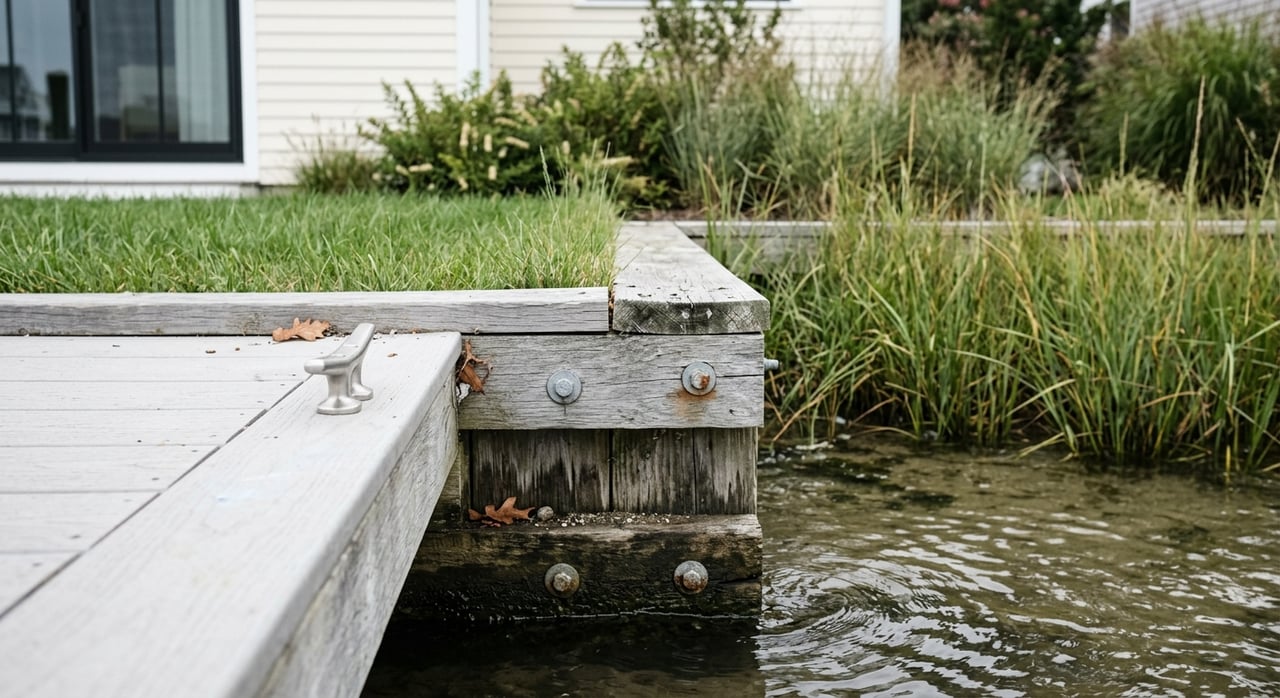
Buying Waterfront Property in Hollywood, MD
May 21, 2026
May 21, 2026
Buying a waterfront home in Hollywood sounds simple until you realize that “waterfront” can mean very different things. You may be picturing a private dock and easy boat days, while the property actually relies on a community pier, nearby marina, or public landing. If you want to buy with confidence, you need to know how access, permits, flood risk, and shoreline rules work before you make an offer. Let’s dive in.
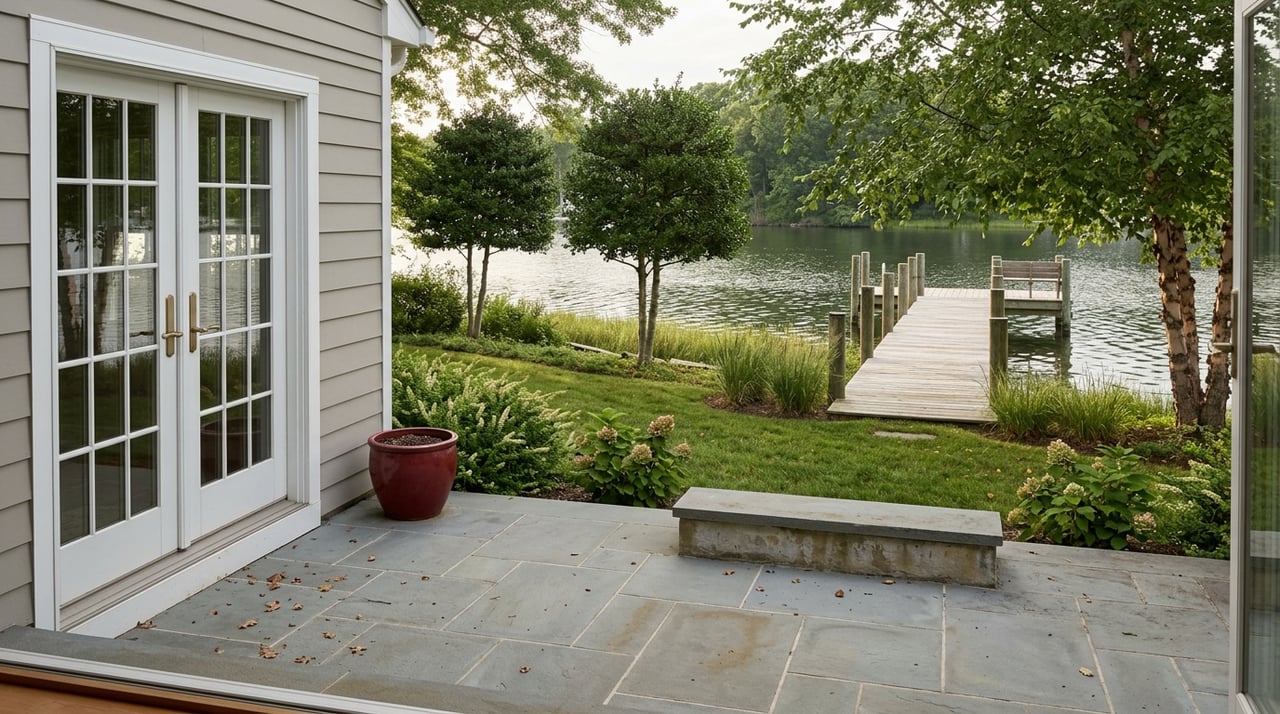
In Hollywood, a waterfront property is not always direct shoreline ownership with private riparian rights. Some homes have direct frontage, some depend on a shared community pier or boat ramp, and others are simply close to public access or marina access.
That difference matters more than many buyers expect. It affects how you use the property now and what you may be allowed to add or change later.
St. Mary’s County also has public landings in the Hollywood area, including Clarke's Landing and Forest Landing, along with Greenwell State Park in Hollywood. The county tourism site also lists Blackstone Marina in Hollywood, which gives buyers another way to enjoy the water lifestyle even without a private dock.
Before you fall in love with a view, confirm exactly how water access works. A home with deeded private access offers a different ownership experience than a home that depends on community-controlled amenities or public launch options.
Public access can still be valuable, but it usually comes with more limits. St. Mary’s County says county public landings are closed between sunset and sunrise except for loading and unloading boats, and overnight parking is not allowed.
That means your day-to-day routine may look very different depending on the property. If boating convenience is a top priority, access details should be one of your first checks, not an afterthought.
One of the biggest mistakes buyers make is assuming they can add a private pier later. In St. Mary’s County, that is not always true.
County rules say that if a subdivision created after March 27, 1990 already has or plans a community pier or community boat ramp, individual lots in that subdivision cannot build their own piers, pilings, or boat ramps. So even if a lot looks like it should support a private dock, the rules may say otherwise.
This is why you should verify whether the water amenity is private, deeded, shared through the community, or only available through nearby public access. Two homes with similar water views can offer very different long-term options.
Much of the land near tidal water in Hollywood falls under the county’s Critical Area program. St. Mary’s County says the Critical Area applies to land within 1,000 feet of the mean high water line of tidal waters or the landward edge of tidal wetlands.
Inside that area, the Critical Area Buffer is at least 100 feet of natural vegetation. In some Resource Conservation Areas tied to new subdivisions or site plans, a 200-foot Buffer may be required.
For you as a buyer, this matters because the Buffer can affect additions, landscaping changes, shoreline paths, and other improvements. Even small plans near the water may require review and approval.
If a lot includes a Critical Area Buffer, development or redevelopment may require mitigation through an approved Buffer Management Plan. St. Mary’s County also notes that modest changes such as an access path to the shoreline, invasive-plant removal, or filling lawn areas in the Buffer can require an approved plan.
That does not mean a waterfront property is a bad choice. It means you should buy with a clear understanding of what is already approved and what extra steps future work may involve.
A shoreline is not just part of the view. It is also part of the property’s maintenance picture and long-term cost.
In Maryland, shoreline work is regulated as an environmental issue. St. Mary’s County says development in waters of the State and tidal wetlands requires authorization from the Maryland Department of the Environment, and county approval is also required for piers and structures at or above mean high water.
You may see different shoreline types from one property to another, including natural vegetated shoreline, living shoreline, or hardened stabilization such as bulkheads or revetments. Maryland DNR says living shorelines are the preferred shore-protection method, and site conditions help determine whether a living shoreline approach or structural stabilization is appropriate.
When comparing properties, ask how the shoreline has been maintained and whether any repairs or replacement work has been done. A bulkhead, revetment, or living shoreline may each come with different upkeep needs and permitting history.
If you hope to repair or replace a pier, bulkhead, or erosion-control feature, expect that it may be a permitting project rather than a quick contractor job. Depending on the property, that can involve MDE permits, county authorization, a pre-application meeting, and mitigation requirements.
Waterfront living often comes with extra floodplain questions, and it is wise to address them early. St. Mary’s County says FEMA has identified Special Flood Hazard Areas in the county, and permits are required before construction or development in or near a flood hazard area.
If the home is in an A or V flood zone and you are using federally related financing, flood insurance is mandatory. An elevation certificate may also be required or helpful for pricing.
This is one of the most important cost questions to answer before you finalize your numbers. A beautiful home can feel very different once flood insurance and future compliance costs are part of the ownership picture.
St. Mary’s County notes that if a home is substantially improved or substantially damaged, it must comply with current floodplain regulations. The county says substantial damage can be triggered when repair costs reach or exceed 50 percent of the home’s original market value.
That rule matters if you are buying an older waterfront home with renovation plans. A project that seems straightforward at first can become more involved if floodplain compliance is triggered.
Waterfront purchases often need more due diligence time than inland homes. In St. Mary’s County, permit timing can vary based on location and the type of work involved.
County guidance says many permits outside the Critical Area can be on-demand. But proposed construction or disturbance within the Critical Area can take 60 to 90 days, and septic-related additions or renovations can take 30 to 60 days because the Health Department must review them.
If you are buying with plans to renovate, add outdoor features, or improve shoreline access, build that timing into your expectations. This is especially important if you are relocating on a firm schedule.
Before you write an offer, make sure you can answer these questions:
In Hollywood, two waterfront homes can look similar online but differ in major ways once you review the details. One may offer private pier rights and a manageable shoreline. Another may depend on community access, sit deep in the Critical Area Buffer, or come with more floodplain and permitting complexity.
That is why local guidance matters. A knowledgeable local advisor can help you check county GIS flood layers, Critical Area status, permit history, and shoreline documentation before you invest time, travel, or emotion in the wrong property.
If you are thinking about buying waterfront property in Hollywood, the smartest move is to slow down long enough to ask the right questions. When you understand access, shoreline rules, flood risk, and long-term maintenance from the start, you can buy the lifestyle you actually want, not just the view you saw in the photos.
If you want a local, educator-style guide to help you compare Hollywood waterfront and water-access homes, reach out to Diana Washabaugh for clear answers and thoughtful support every step of the way.
Stay up to date on the latest real estate trends.




Your real estate journey is unique, and I’m committed to providing the support and expertise you need every step of the way. Let’s connect and talk about your goals